研究内容
1. 実験動物に特化した環境エンリッチメントのデータベース(DEEL)の構築(林、北村)
Construction of the database of environmental enrichment for animal experimentation (DEEL) (Hayashi, Kitamura)
近年、動物福祉の観点から、実験動物の飼育にも環境エンリッチメントを導入することが望まれる。環境エンリッチメントが動物生理に与える影響は小さくなく、リファレンスとなるデータセットが必要である。また、動物種は性別、齢や実験条件によって最適なエンリッチメントの条件を定める必要がある。私たちは東北大内外の研究者と協力しながら、実験動物の環境エンリッチメントのデータベース(DEEL)の構築を進めている。
From the perspective of animal welfare, there has been a growing call to incorporate environmental enrichment (EE) into the care of laboratory animals. Since environmental enrichment has a significant impact on animal physiology, a reference dataset is required to be constructed. Furthermore, optimal conditions of EE must be determined for each animal species based on numerous factors including sex, age, and experimental settings. We are currently working with researchers both within and outside Tohoku University to develop a Database on Environmental Enrichment for Laboratory animals (DEEL).
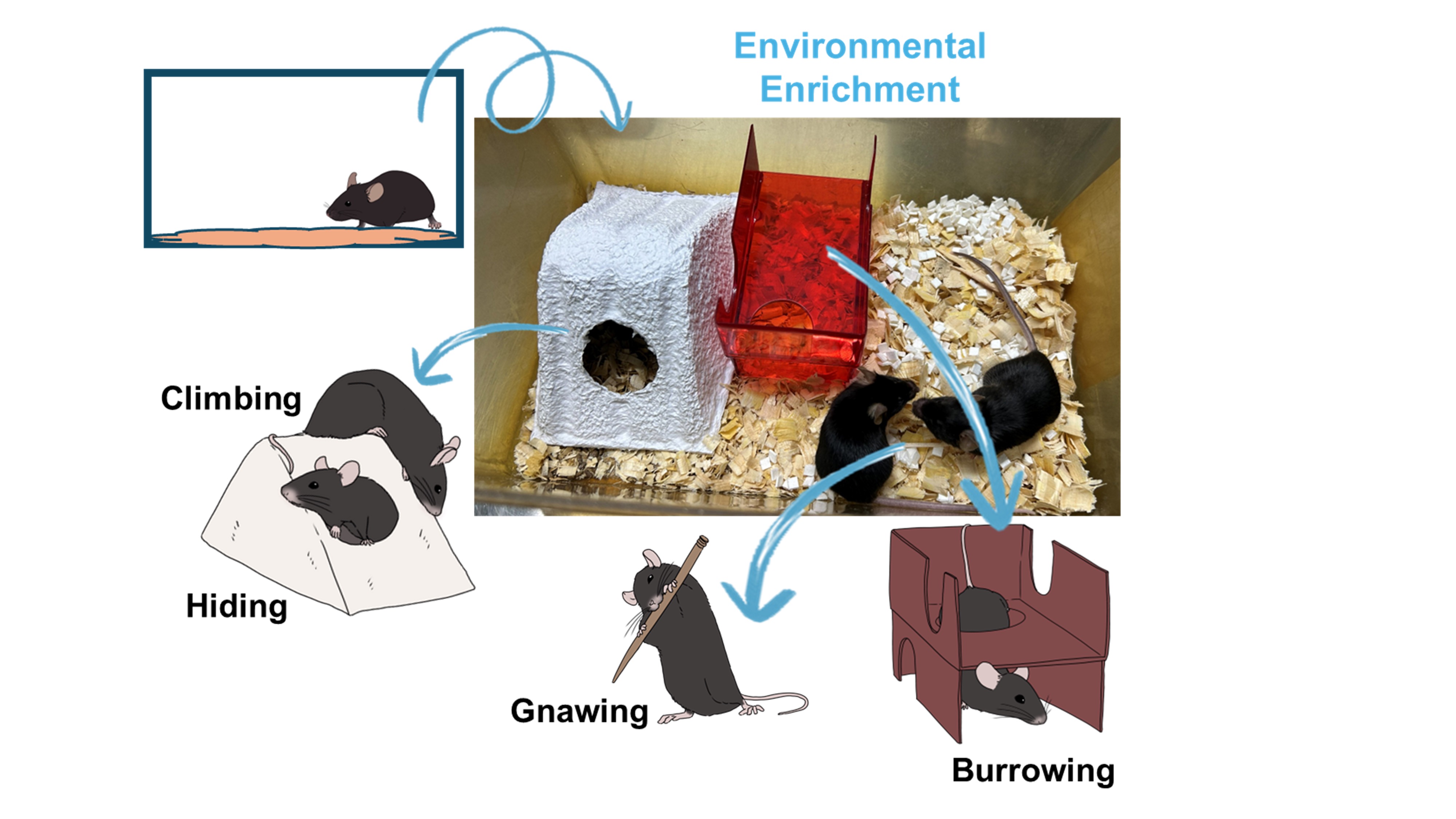
Various applications of environmental enrichment for mice and the behaviors they elicit.
2. 動物実験技術のアーカイブ化と実験デザインシステムSPARCIの構築(林、北村)
Achieving animal experimentation techniques and construction of the supporting system SPARCI for designing animal experimentation (Hayashi, Kitamura)
実験動物の苦痛軽減や使用動物数の削減を進めるためには、正しい動物実験技術の普及が求められる。私たちは東北地方で培われた種々の動物実験技術の映像・画像アーカイブを集積している。またこれらと各種の機器を用いた解析を組み合わせた動物実験のデザインをサポートするシステム(SPARCI)を構築している。
To refine the handling of laboratory animals and minimize the number of animals used, it is desirable to promote the widespread adoption of proper animal experimentation techniques. We are compiling a video and image archive of various animal experimentation techniques developed in the Tohoku region. We are also developing a system (SPARCI) that supports the design of animal experiments by combining these resources with analyses performed using various types of equipment.
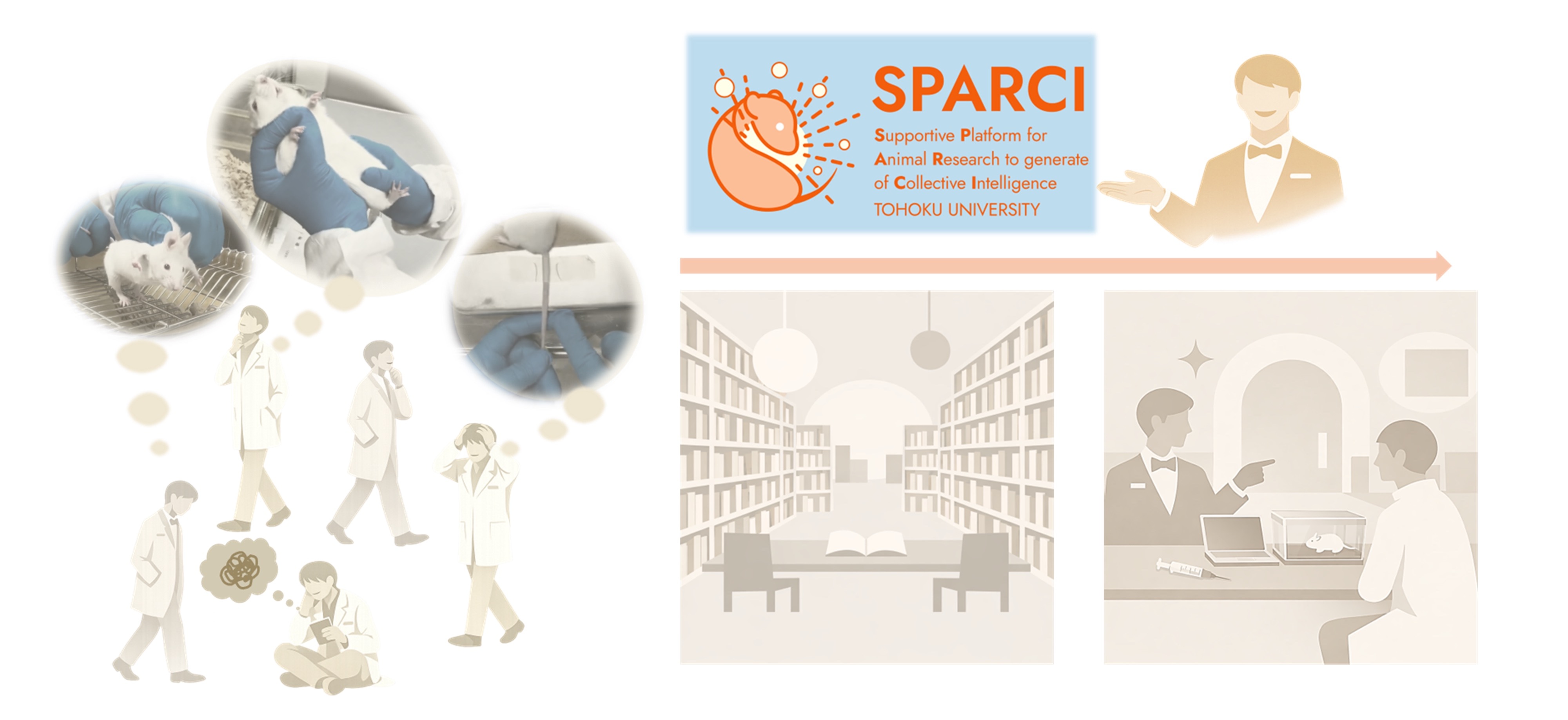
Through the SPARCI project, we are compiling video resources on animal experimentation techniques and working to develop a system for designing animal experiments based on this data.
3. ポリジェニックなヒト疾患を解明するためのマウスモデルの構築(北村、林)
Generation of novel mouse models to elucidate human polygenic diseases (Kitamura, Hayashi)
ヒトの慢性疾患の多くで、環境因子に対する感受性は複数の遺伝子の機能の和により決まる。従来の遺伝子改変マウスは特定の遺伝子の機能を明らかにすることが主たる目的であり、ポリジェニックな慢性疾患のモデルにはならない。私たちは発生工学の技術を駆使し、ヒトの生活習慣病や加齢性疾患を解析するための新たなヒト化マウスの作製を試みている。
For most human chronic diseases, susceptibility to environmental factors is determined by the combined effects of multiple genes. Conventional genetically modified mice are primarily designed to elucidate the function of a target gene and therefore do not serve as models for polygenic chronic diseases. We are utilizing developmental engineering techniques to create novel humanized mouse models for the analysis of human metabolic and geriatric diseases.
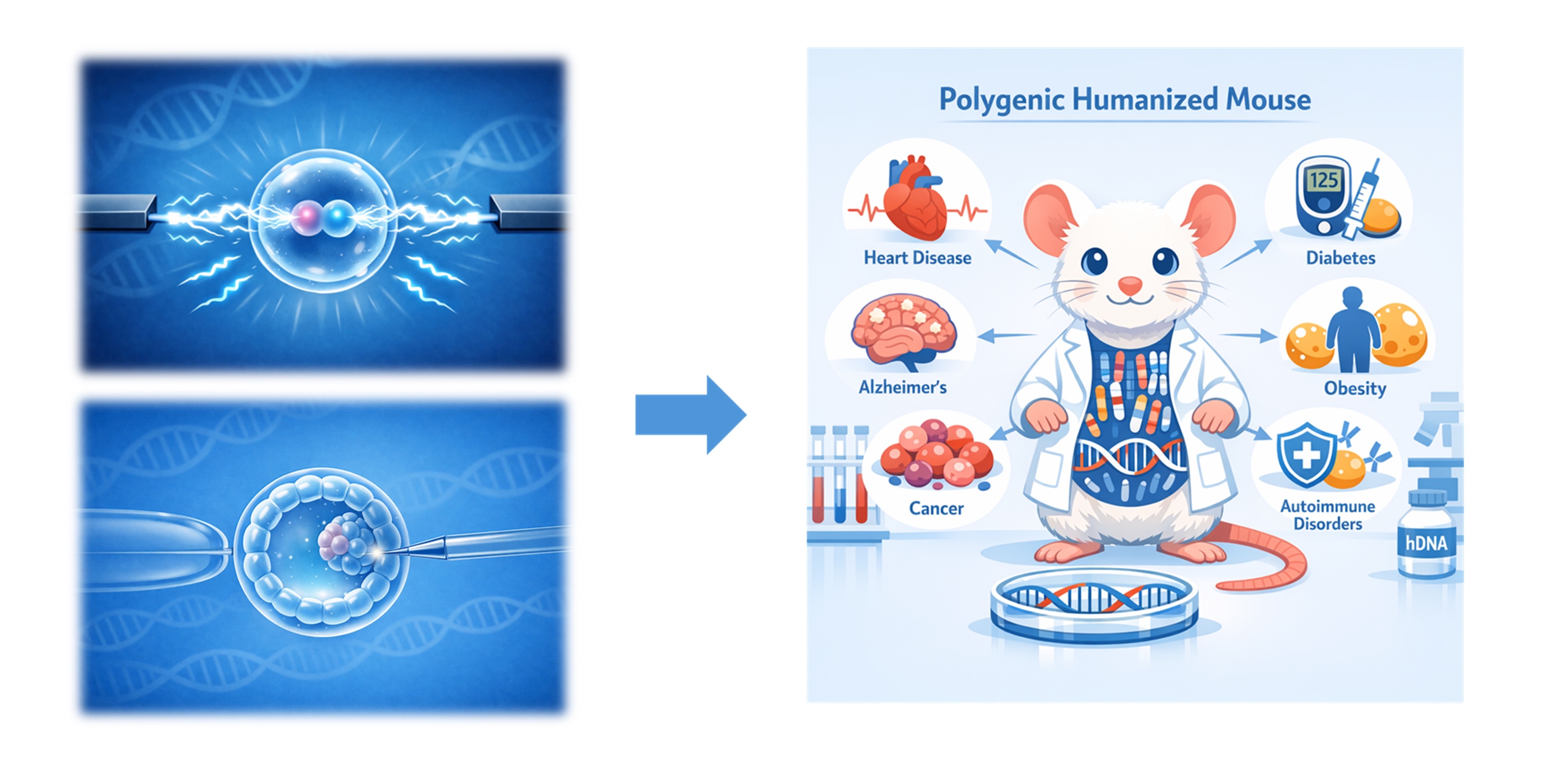
We attempt to generate new polygenic humanized mice using developmental engineering methods.
4. ユビキチン特異的プロテアーゼの生活習慣病・加齢性疾患における役割(北村)
Pathophysiological roles of USPs in metabolic disorders and age-related diseases (Kitamura)
タンパク質ユビキチン化はタンパク質にユビキチン鎖が付加される修飾である。タンパク質-タンパク質相互作用を制御したり、プロテアソームによる分解を促すなどタンパク質の機能を修飾する。ユビキチン特異的プロテアーゼ(USP)群はタンパク質に結合するユビキチン鎖を分解する代表的な酵素群である。私たちはこれまでにUSP群の一つであるUSP2が視床下部ニューロンや脂肪組織マクロファージ、骨格筋、精子のエネルギー代謝を調節する"臓器横断的なエネルギー代謝の鍵分子"であることを明らかにしてきた。臓器選択的な遺伝子改変マウスを駆使することで、他の臓器でのUSP2の役割を調べると共に、生活習慣病や加齢性疾患における他のUSPとの役割分担について調べている。
Protein ubiquitination is a post-translational modification in which ubiquitin chains are attached to target proteins. This modification regulates protein-protein interactions and promotes proteasomal degradation, thereby modulating the functions of target proteins. Ubiquitin-specific proteases (USPs) are a representative family of enzymes that cleave ubiquitin chains attached to target proteins. We have previously shown that USP2, one of the USPs, is a key molecule for organ-crossing energy metabolism that regulates energy metabolism in hypothalamic neurons, adipose tissue macrophages, skeletal muscle, and sperm. By taking advantage of organ-specific gene-modified mice, we are investigating the roles of USP2 in other organs as well as the division of roles among other USPs in metabolic disorders and age-related diseases.
References:
Biomedicines 14, 783, 2026; Int J Mol Sci 25, 11936, 2024; J Neurosci 42, 4607-18, 2022; Cell Mol Life Sci 78, 2929-48, 2020; FASEB J 27, 4940-53, 2013
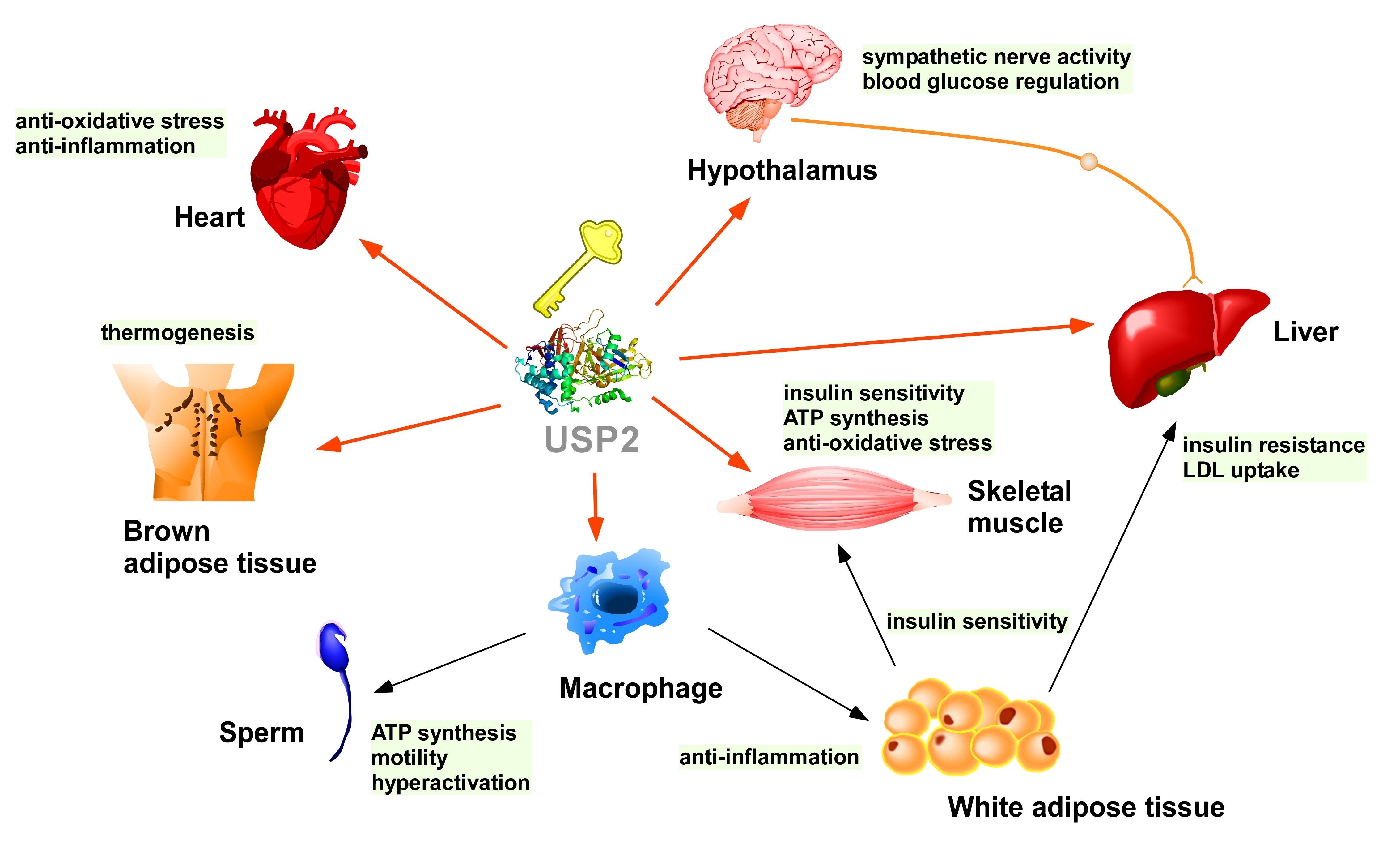
USP, as a key molecule of anti-oxidative responeses and energy metabolism.
5. マクロファージの新たな膜・分泌タンパク質の炎症性疾患における役割解明(北村)
Investigation of novel membrane or secretory molecules in macrophages at an individual level (Kitamura)
これまでマクロファージなどのミエロイド系細胞の機能未知の分子を探索や役割を調べたり(例えば:MAIL/IκBζ)、ミエロイド系細胞の腫瘍である骨髄性白血病の幹細胞のマーカー分子群を探索した。マクロファージは血球系の細胞であることから、膜・分泌タンパク質を介したコミュニケーションが機能制御に不可欠である。そこで、膜画分のオミックス解析で見出したマクロファージで機能が分かっていない膜・分泌タンパク質の役割を調べている。マクロファージが制御する炎症応答は、感染に伴う急性炎症のみならず、生活習慣病や加齢性疾患の発症に深くかかわる。そこで、ゲノム編集を駆使することで、個体レベルでのこれら分子の役割を調べている。
We have searched for novel molecules (e.g., MAIL/IκBζ) in myeloid cells including macrophages, and molecular signatures of myeloid leukemia stem cells. Since macrophages are hematopoietic cells, communication through membrane and secretory proteins is essential for functional regulation. Therefore, we are attempting to investigate the pathophysiological roles of membrane and secretory proteins whose functions are still unclear in macrophages. In addition to acute inflammatory diseases, chronic inflammation regulated by macrophages is deeply involved in the pathogenesis of metabolic disorders and age-related diseases. Therefore, we are exploring the roles of these molecules at the individual level by taking advantage of genome-edited animal models.
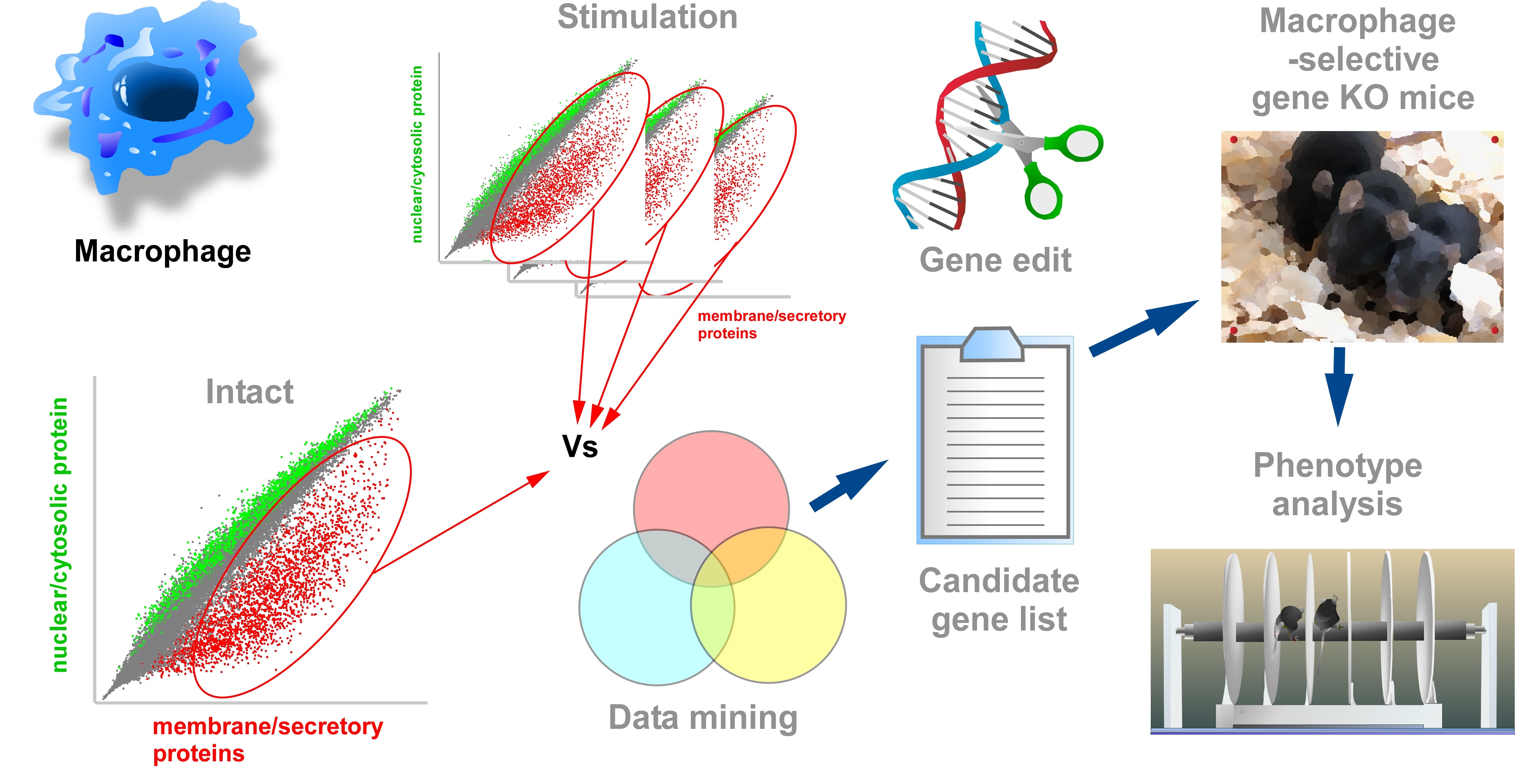
Investigation of novel membrane or secretory molecules in macrophages at an individual level.
6. 嗅覚情報に基づく性特異的社会行動のホルモン制御機構(林)
Hormonal Regulation of Sex-Specific Social Behaviors Driven by Olfactory Cues (Hayashi)
哺乳類の性特異的な社会行動は嗅覚情報に依存している。その制御メカニズムをオキシトシンやバソプレシンなどの神経ペプチドに着目して調べている。特にオキシトシンは、嗅覚情報の処理や他個体との相互作用に重要な役割を果たすことから、社会的接触や快情動の形成にどのように関与するのかについて、さらなる理解を目指している。
Sex-specific social behaviors depend on olfactory cues in mammals. We focus on the underlying mechanisms, with particular emphasis on neuropeptides such as oxytocin and vasopressin. In particular, oxytocin plays a key role in processing olfactory information and mediating interactions with conspecifics. Our current work aims to further elucidate how these processes contribute to the formation of social contact and positive emotional states.
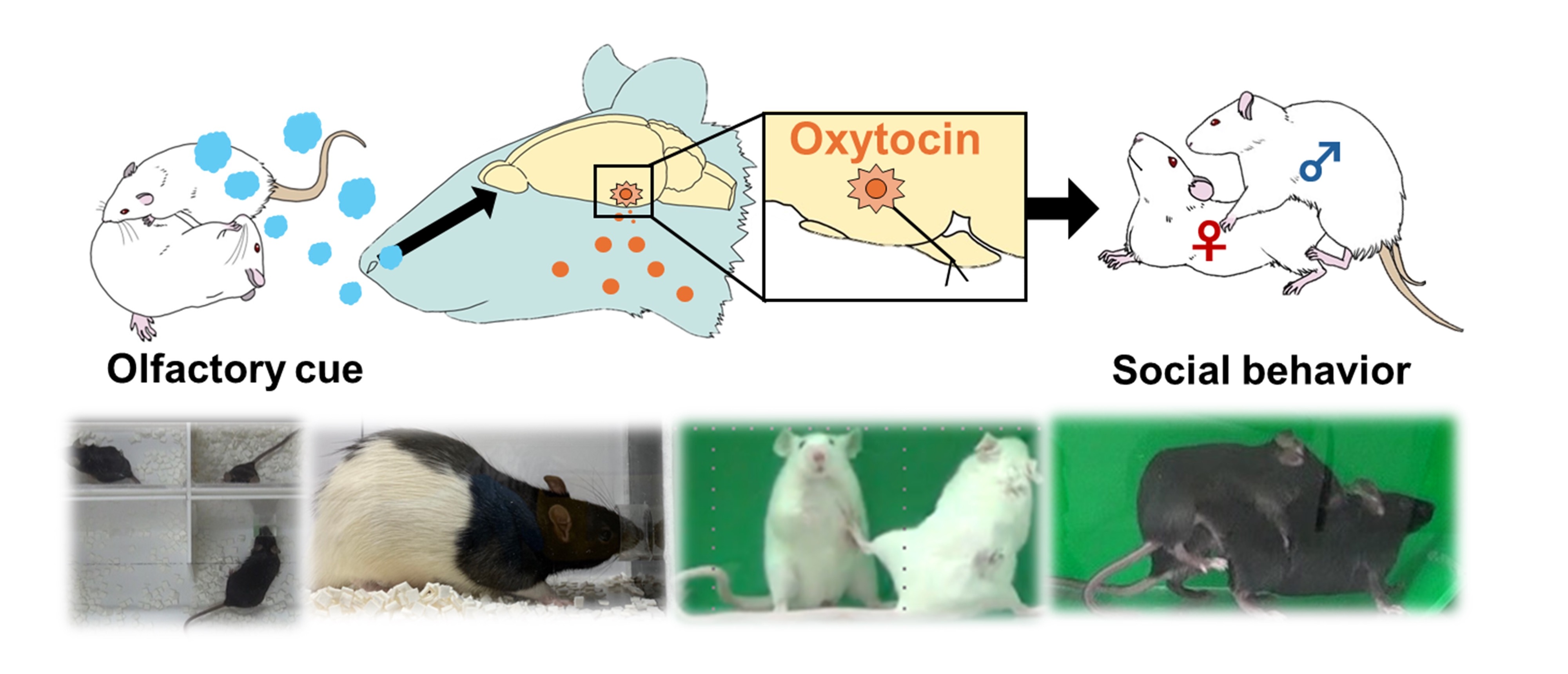
Olfactory information regulates social behaviors through activation of the hypothalamic oxytocin system.